



What Are Skin Boosters? Types, Results and How They Differ From Fillers
- “Skin booster” is a broad term for injectables other than traditional dermal fillers, and they work through different mechanisms.
- They mainly aim to improve skin quality, such as hydration, elasticity and glow, rather than add volume.
- The main groups are hyaluronic acid based treatments, biostimulators and polynucleotides.
- Typical courses range from one session to four, with results lasting from around 6 months to 18 months or more, depending on the type.
- Choose a regulated practitioner, ask exactly what product is used, and have a consultation before any treatment.
What Are Skin Boosters?
Skin boosters are injectable treatments designed to improve skin quality, including hydration, elasticity, laxity and glow. The term is a broad one. One UK clinic article describes it as covering injectables other than traditional dermal fillers, which work through different biological mechanisms and suit different concerns.
Because the label is so wide, two treatments sold as “skin boosters” can be completely different. That is why asking what is actually in the syringe matters more than the name on the menu.
| Group | How it works in simple terms | Main aim |
|---|---|---|
| Hyaluronic acid (HA) based | Adds hydration, with some types lightly crosslinked | Hydration and smoothness |
| Biostimulators | Encourages the skin to make its own collagen | Firmness and elasticity over time |
| Polynucleotides | Purified DNA fragments that support skin repair processes | Skin quality and recovery |
How Are Skin Boosters Different From Dermal Fillers?
Dermal fillers add structure and volume, while skin boosters mainly improve the quality of the skin itself. The clinic article states that none of the eight treatments it compares adds significant volume, and that moderate to advanced structural change remains the territory of dermal fillers or, occasionally, surgery.
| Feature | Skin boosters | Dermal fillers |
|---|---|---|
| Main aim | Skin quality: hydration, glow, elasticity | Volume, contour and structure |
| Typical areas | Face, neck, hands, often broad areas | Specific areas such as cheeks, lips, jawline |
| Visible change | Gradual and subtle | Often visible straight away |
| Course | Often several sessions | Often one session, with top-ups later |
| Best for | Dull, dry or lax skin | Lost volume or shape |
If you are comparing the two, our guide to dermal fillers explains how fillers work and where they are used.
What Types of Skin Boosters Are There?
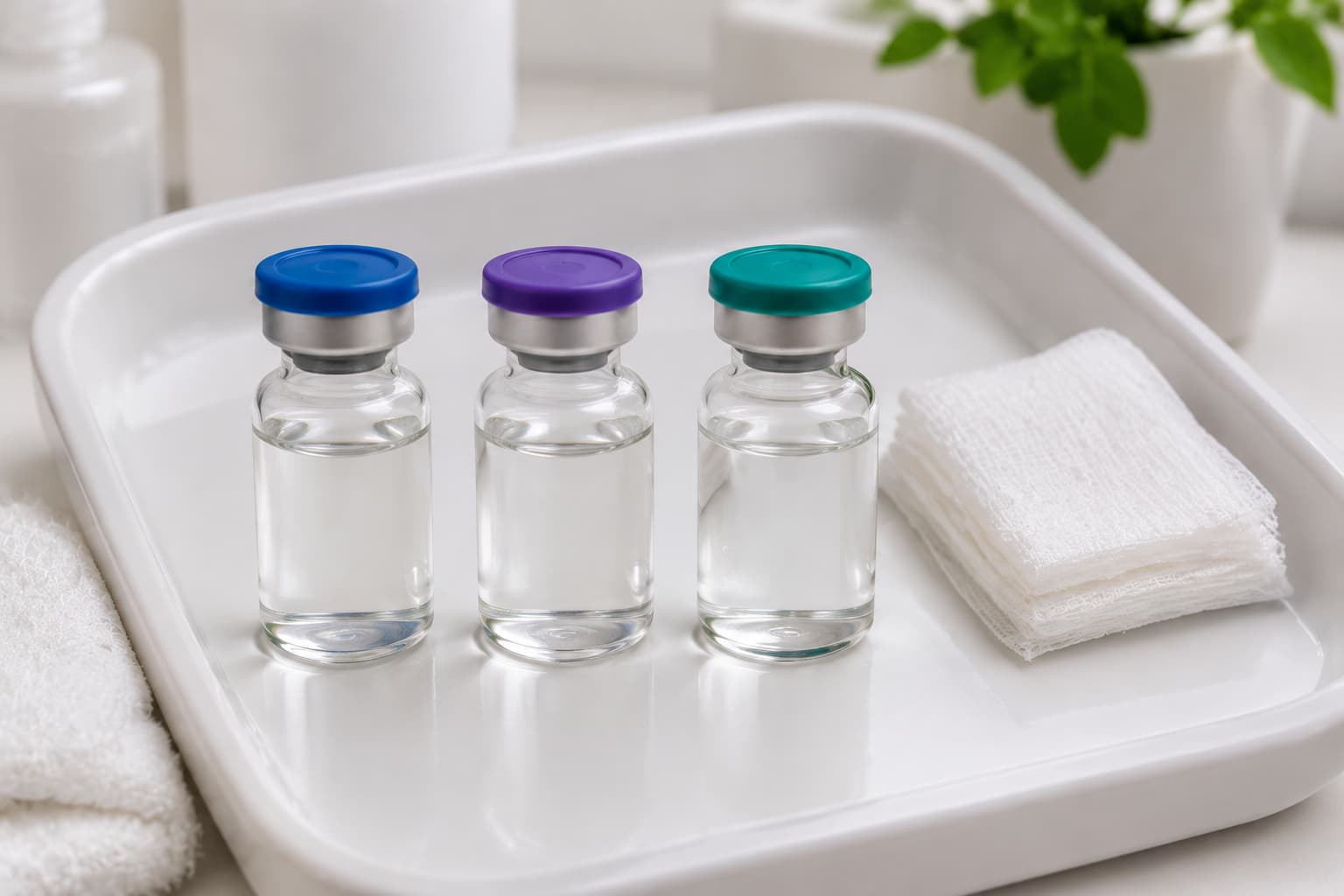
The article groups skin boosters into three families: hyaluronic acid based, biostimulators and polynucleotides. Within each family there are several products with different formulations, so the details vary even between treatments in the same group.

Hyaluronic Acid Based Treatments
These use hyaluronic acid, a molecule that holds water in the skin. Some are non-crosslinked and spread through the tissue, some are lightly crosslinked and some combine hyaluronic acid with other ingredients. They mainly aim to improve hydration and smoothness.
Biostimulators
Biostimulators are injected to encourage the skin to produce more of its own collagen over time. The article describes treatments based on poly-L-lactic acid microspheres and on diluted calcium hydroxyapatite in this group. Results build gradually across a course.
Polynucleotides
Polynucleotides are purified DNA fragments, usually from salmon according to the article, that are said to activate fibroblasts and support the skin’s own collagen and elastin. They are often chosen for skin quality and for delicate areas.
How Many Sessions Do Skin Boosters Need?
It depends on the consultation and can range from a single session, spaced from 7 days to 6 weeks apart. Your practitioner should explain the plan for the specific treatment they recommend, not give a single number for all skin boosters.
| Group (examples of ranges in the source) | Typical sessions | Results last |
|---|---|---|
| Some HA-based treatments | 1 to 2 sessions | Around 6 to 9 months |
| Hybrid HA treatments | 1 to 3 sessions | 12 to 18+ months |
| Biostimulators | 3 sessions, 3 to 6 weeks apart | 12 to 18+ months |
| Polynucleotides | 3 to 4 sessions, 2 to 4 weeks apart | 6 to 12 months |
These ranges come from one clinic’s article and are not a promise for any individual. Results vary with age, lifestyle, medical history and the specific product.
What Is the Downtime After Skin Boosters?
Downtime is usually short, from a few hours to a few days. The article lists downtime from hours up to 48 hours for several treatments, and a few days of bruising or swelling for some biostimulators. Small bumps, redness and bruising at injection points are common effects of any injectable.
- Plan for possible redness, swelling or bruising for a day or two
- Avoid booking a treatment right before a major event
- Follow your practitioner’s aftercare advice on heat, exercise and skincare
- Use sun protection as advised
Can Skin Boosters Be Dissolved?
Some can and some cannot. The article says hyaluronic acid based treatments can be dissolved with hyaluronidase where they are fully hyaluronic acid, while polynucleotides and some biostimulators have no dedicated dissolving agent. Reversibility is worth asking about before you choose.
| Type | Reversible? |
|---|---|
| HA-based (non-hybrid) | Yes, with hyaluronidase |
| Hybrid HA with another ingredient | Partly, for the HA element only |
| Biostimulators | No dedicated dissolving agent |
| Polynucleotides | No dedicated dissolving agent |
Who Might Skin Boosters Suit?
People who are happy with their shape and volume but want better skin quality are the most common candidates. That includes skin that looks dull, dry, crepey or tired, and skin where fine texture matters more than structure.
- Dull or dehydrated skin
- Fine lines linked to dryness
- Early loss of firmness or elasticity
- Skin that has lost its glow with age, sun or lifestyle
- Areas such as neck, hands or around the eyes, where suitable
Suitability depends on your health, skin and goals, and only a qualified practitioner can assess it.
Who Should Be Careful or Avoid Them?
Certain medical situations mean treatment should be delayed or avoided. Typical examples that practitioners ask about include pregnancy and breastfeeding, active skin infection or inflammation in the area, certain autoimmune conditions, a history of allergic reactions to ingredients, and some blood-thinning medicines.
This is general information, not medical advice. Your practitioner should take a full medical history, and you should be honest about medicines, supplements and previous treatments.
What Are the Risks of Skin Boosters?
All injectables carry risks. The most common are bruising, swelling, tenderness, redness and small lumps. Less common but more serious complications can occur, which is why the choice of practitioner matters. Seek urgent medical help for severe pain, skin that turns white or dusky, vision changes or a spreading rash.
The clinic article does not include a dedicated risks section, so use it for background only and ask your practitioner to explain the risks of the specific treatment.
Are Skin Boosters Better Than Dermal Fillers?
Neither is better in general. They solve different problems. Skin boosters suit skin quality concerns, and fillers suit volume and shape concerns. Some people use both, but the order and spacing should be planned by a qualified practitioner.
A clear conversation about your goals avoids that.
Skin Boosters vs Anti-Wrinkle Injections
Anti-wrinkle injections relax the muscles that cause expression lines, while skin boosters improve the quality of the skin. They address different causes, so one does not replace the other. Our guide on dermal fillers vs anti-wrinkle injections explains the difference between fillers and muscle relaxing treatments.
Skin Boosters vs Microneedling and Other Skin Treatments
Microneedling uses tiny needles to trigger the skin’s own repair response, while skin boosters deliver a product beneath the skin. Some people combine approaches, but your practitioner should plan the timing. Read what microneedling is if you want to compare how each approach works.
| Treatment | Approach | Best for |
|---|---|---|
| Skin boosters | Injected product under the skin | Hydration, glow, elasticity |
| Microneedling | Needles trigger repair, no product left behind in standard use | Texture and scarring |
| Chemical peels | Solution removes outer skin layers | Dullness and pigmentation |
| Dermal fillers | Injected gel adds structure | Volume and contour |
Do Skin Boosters Work on the Neck, Hands and Around the Eyes?
Some practitioners treat areas beyond the cheeks, such as the neck, hands, chest and the skin around the eyes, because these areas show dryness and fine crepey lines early. Suitability depends on the product, the thickness of the skin and your medical history, so this is a decision for your practitioner.
How Long Until You See Results?
Results usually build gradually, not overnight. Hydrating treatments may show a smoother, more even look within days, while biostimulators and polynucleotides tend to show change over weeks as the skin responds across a course. Be wary of anyone who promises a dramatic change after one visit.
- Early effects: hydration and glow, often within days to a couple of weeks
- Building effects: firmness and texture, often across several weeks
- Full course effect: usually judged after the planned sessions are complete
- Maintenance: depends on the product and how your skin responds
Do Skin Boosters Hurt?
Most people describe the treatment as uncomfortable but manageable. Practitioners often use numbing cream or other comfort measures, and the experience varies by area and product. Ask what to expect, and what comfort options are offered, before you book.
Tenderness, small bumps and mild bruising are common afterwards and usually settle. Tell your practitioner if pain is severe or getting worse.

What Questions Should You Ask Before Booking?
Ask about the exact product, the number of sessions, the downtime, the risks, the aftercare and what happens if something goes wrong. A good practitioner answers clearly and explains why a particular product suits your concern.
- Which skin booster is right for my concern, and why?
- What is in it, and is it reversible?
- How many sessions will I need, and how far apart?
- What results can I realistically expect, and when?
- What are the risks for me?
- Who do I contact if I have a problem after treatment?
What Should You Do Before and After Treatment?
Follow your practitioner’s instructions. In general, tell them about all medicines and supplements beforehand, avoid booking close to important events and protect your skin from the sun afterwards. Skip heat, intense exercise and heavy make-up for the period they advise.
| When | General advice |
|---|---|
| Before | Share your medical history, avoid new skincare products, and plan time for any bruising |
| Straight after | Follow the aftercare sheet, keep hands off the area |
| First days | Avoid heat, intense exercise and heavy make-up if advised |
| Following weeks | Use sun protection and attend any review appointment |
Where Does Soniya Behrens Fit In?
Soniya Behrens is an aesthetics clinic in London offering a range of facial treatments. We do not list specific skin booster products or protocols in this guide. Please speak to the clinic at a consultation about what is available and what suits your skin. You can find out more on the Soniya Behrens website.
Frequently Asked Questions
What are skin boosters? Injectable treatments that mainly aim to improve skin quality, such as hydration, elasticity and glow, rather than add volume.
Are skin boosters the same as fillers? No. Fillers add structure and volume, while skin boosters improve skin quality.
How many sessions do skin boosters need? It varies from one session to three or four, depending on the type.
How long do skin boosters last? From around 6 months to 18 months or more, depending on the treatment.
Can skin boosters be dissolved? Hyaluronic acid based ones can be dissolved with hyaluronidase, but polynucleotides and some biostimulators have no dedicated dissolving agent.
What are the side effects? Common effects include bruising, swelling, redness and tenderness. Serious complications are less common but need urgent medical attention.
How do I choose a practitioner? Choose a regulated health professional, check their registration yourself and ask about training, insurance and products.