



If you have spent any time researching injectable treatments in London, you have probably come across Profhilo and dermal fillers mentioned in the same breath. This is one of the most common points of confusion in aesthetic medicine, and it is easy to see why. Both are injectable treatments, both are usually based on hyaluronic acid, and both are performed by the same type of practitioner, often at the same clinic.
The profhilo vs dermal fillers London comparison matters because the two treatments are designed to do different jobs, even though they can look similar from the outside. Profhilo is intended to improve the overall quality of your skin, focusing on hydration and elasticity. Dermal fillers are intended to restore volume and support facial structure in specific areas.
Understanding this distinction is the first step in working out which treatment, if either, actually fits your concerns. This article looks at the practical differences between the two, the type of skin concerns each is generally suited to, and how to think through the decision before booking a consultation.
Profhilo vs Dermal Fillers: What Is the Main Difference?
At the centre of the difference between Profhilo and dermal fillers is a simple distinction: one treatment addresses skin quality, the other addresses volume and shape.
Profhilo works through a process known as bio-remodelling. It is injected at a small number of specific points and spreads through the surrounding tissue rather than staying in one place. As it disperses, it supports the skin’s own collagen and elastin production, which is what leads to improvements in hydration, tone and elasticity over time.
Dermal fillers work differently. Most are made from cross-linked hyaluronic acid, formulated to hold its position once injected. This structure allows fillers to add volume and definition to a specific area, such as the cheeks or lips, rather than spreading through the tissue.

The table below summarises the core differences.
| Feature | Profhilo | Dermal Fillers |
| Purpose | Improve overall skin quality | Restore volume in specific areas |
| How it works | Spreads through tissue via bio-remodelling | Placed precisely to create structure |
| Main concern treated | Dehydration, dullness, reduced elasticity | Volume loss, hollowing, flattened contours |
| Changes facial shape | No | Yes |
| Treatment goal | Healthier, more hydrated skin | Restored volume and defined contour |
This is also where the comparison sometimes gets described as skin booster vs dermal filler, since Profhilo falls into the broader skin booster category. Skin boosters, including Profhilo, are designed to improve the condition of the skin itself, while fillers are designed to change its shape.
How Does Profhilo Work Compared With Dermal Fillers?
A common question at consultation is whether Profhilo works like filler once injected. It does not, and the way each product behaves in the tissue explains why.
Profhilo uses a high concentration of stabilised hyaluronic acid that has not been cross-linked in the way filler products are. Because of this, it does not hold a fixed shape after injection. Instead, it spreads through the surrounding tissue, where it interacts with the skin to support natural collagen and elastin production. This is what produces the gradual improvement in skin quality that Profhilo is associated with, rather than an immediate change in volume.
Dermal fillers are formulated to do the opposite. Cross-linking gives the gel enough structure to remain in place, which is essential for a treatment intended to hold volume or define a particular contour. Without that structure, a filler placed in the cheek or lip would not maintain its shape.
In short, Profhilo is designed to move through the skin and support its underlying function, while fillers are designed to stay exactly where they are placed. This single difference in formulation accounts for most of the practical contrast between the two treatments.
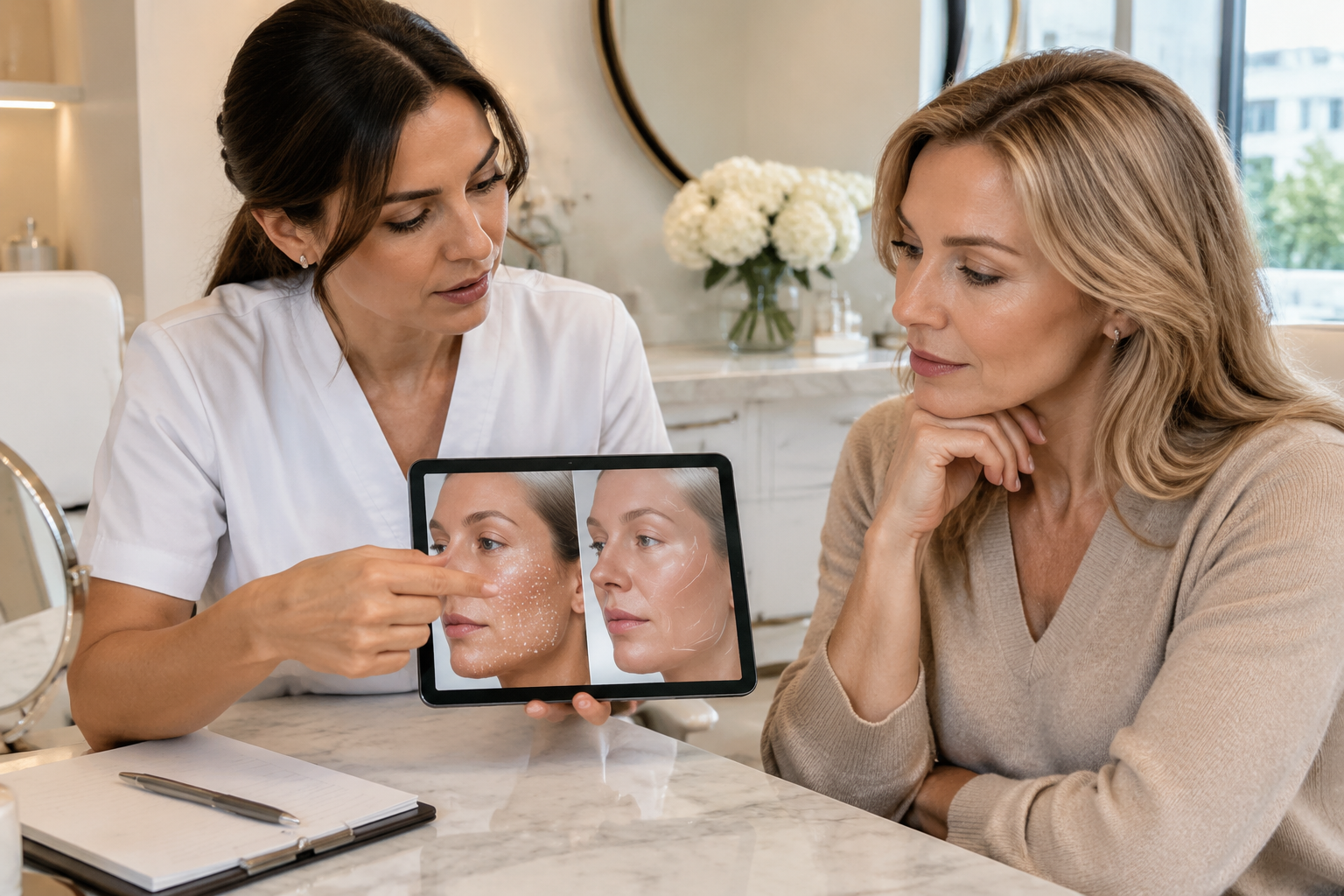
Profhilo vs Fillers for Different Skin Concerns
Working out profhilo or fillers for ageing skin usually comes down to identifying what type of change you are noticing, since ageing affects the face in more than one way.
When Profhilo May Be Considered
Profhilo is generally considered when the main concern relates to the condition of the skin rather than its shape. This can include:
- Dehydrated skin that looks dull or feels less supple than before
- Reduced elasticity, where skin has started to lose some of its natural firmness
- Uneven or rough skin texture
- Early signs of ageing that have not yet involved noticeable volume loss
People in this category often describe their skin as looking tired rather than sunken, which is a useful way to distinguish a skin quality concern from a structural one.
When Dermal Fillers May Be Considered
Dermal fillers tend to be more appropriate when the concern involves a genuine change in shape or volume, including:
- Volume loss in the cheeks, temples or under the eyes
- Facial contour changes, such as flattening in areas that once had more definition
- A need for structural support, where the underlying tissue has thinned over time
If the concern is primarily about shape rather than texture, a skin quality treatment on its own is unlikely to deliver the change being looked for.
Is Profhilo a Filler?
This question comes up often, and the answer is straightforward. Profhilo is not a traditional dermal filler.
The overlap between the two lies in the shared ingredient. Both Profhilo and most dermal fillers are based on hyaluronic acid, a substance that occurs naturally in the body and plays a role in keeping tissue hydrated. This shared ingredient is largely why the two are so often grouped together in casual conversation.
The distinction comes down to purpose and behaviour. Dermal fillers are formulated and cross-linked specifically to hold volume in a defined location. Profhilo is formulated to remain fluid enough to disperse through the skin, where its role is to support skin quality rather than create structure. They share a base ingredient but belong to different categories of treatment.
Are Profhilo and Fillers the Same Treatment?
It is understandable that people ask whether Profhilo and fillers are the same. Both are injectable, both are typically administered by the same type of practitioner, and both rely on hyaluronic acid as a foundation. On paper, an appointment for either treatment can look very similar.
The confusion usually resolves once the treatment goals are compared directly. Dermal fillers are chosen when someone wants to change the volume or shape of a specific area. Profhilo is chosen when someone wants to improve the general condition of their skin without altering its structure. They are designed to address different concerns, which is why a proper consultation should always start with identifying the concern itself, rather than assuming either treatment can substitute for the other.
Profhilo vs Fillers: Which Gives Better Results?
There is no simple answer to Profhilo vs filler results, because the two treatments are working towards different outcomes. Comparing them directly is a little like comparing skincare to contouring makeup. Both can improve how the skin looks, but they are not solving the same problem.
Profhilo results tend to develop gradually. A typical course involves two sessions around four weeks apart, with hydration, tone and elasticity improving progressively as the skin responds to the treatment. Many patients describe the change as their skin looking healthier and more refreshed, rather than visibly different in shape.
Dermal filler results are usually visible much sooner, often straight after treatment, once any initial swelling has settled. The change tends to be structural, such as added volume, a softened contour or a more defined feature.
Neither result is inherently better. Someone hoping to address dull, dehydrated skin is unlikely to be satisfied with filler alone, since it does not meaningfully change skin texture. Equally, someone hoping to restore volume in hollowed cheeks will not see that outcome from Profhilo, regardless of how hydrated the skin becomes. The right result depends entirely on matching the treatment to the concern being addressed.
Profhilo vs Fillers for Face: Which Areas Are Treated?
Looking at Profhilo vs fillers for face treatment areas also helps clarify which option fits a particular concern, since the two are generally used on different parts of the face and body.
Profhilo is commonly used on:
- The face, particularly where dehydration or reduced elasticity is noticeable
- The neck, where skin quality changes are often an early sign of ageing
- The décolletage, an area frequently affected by sun exposure over time
- The hands, where skin can thin and lose plumpness
Dermal fillers are more typically used on specific facial features, including:
- The cheeks, to restore or add volume
- The lips, to enhance shape or fullness
- The chin, to improve facial balance
- The jawline, to support contour and definition
This pattern reflects the underlying purpose of each treatment. Profhilo is applied more broadly to support overall skin condition, while fillers are placed precisely to achieve a targeted structural result.
Can You Have Profhilo and Dermal Fillers Together?
Profhilo and dermal fillers are not competing treatments. Many treatment plans include both, depending on what a patient is hoping to achieve. It is entirely possible to want improved skin hydration and quality overall, while also wanting to restore volume in a specific area such as the cheeks.
Whether combining the two treatments makes sense, and in what order, depends on an individual assessment carried out during consultation. A qualified practitioner will consider your skin condition, your specific concerns and your overall goals before recommending whether Profhilo, dermal fillers, or a combination of both would be appropriate.
Which Treatment Is Right for You?
If you are still deciding between Profhilo or dermal fillers, it helps to focus on your primary concern rather than the treatments themselves.
Profhilo may suit people focused on:
- Improving skin hydration
- Supporting elasticity
- Enhancing overall skin quality without changing facial shape
Fillers may suit people focused on:
- Restoring lost volume
- Addressing facial contour changes
- Achieving structural enhancement in a specific area
Many people find their concerns touch on both categories, which is one of the reasons a proper consultation is more useful than trying to make this decision alone.

Frequently Asked Questions
Are Profhilo and dermal fillers the same? No. Both are injectable and both typically contain hyaluronic acid, but they are formulated and used differently. Profhilo is designed to improve skin quality, while dermal fillers are designed to restore volume and shape.
Is Profhilo better than fillers? Neither treatment is better in a general sense. Profhilo is suited to skin quality concerns such as dehydration and reduced elasticity, while fillers are suited to volume loss and contour changes. The right option depends on the concern being addressed.
Does Profhilo replace dermal fillers? No. Profhilo does not restore volume in the way fillers do, and fillers do not provide the same skin quality benefits as Profhilo. The two are generally considered complementary rather than interchangeable.
Can Profhilo and fillers be combined? Yes, in many cases the two can be included within the same treatment plan, depending on individual goals and a practitioner’s assessment.
Which lasts longer, Profhilo or fillers? This varies from person to person and depends on the specific product used. Profhilo’s effects on skin quality tend to build across a course of treatment and are typically maintained with periodic top ups. Filler longevity depends on the product and treatment area, often lasting from several months to more than a year. A practitioner can provide a more precise estimate based on your individual treatment plan.
Conclusion
The profhilo vs dermal fillers comparison ultimately comes down to one question: are you trying to improve the quality of your skin, or restore volume and structure to a specific area? Profhilo is designed for the first goal, using hyaluronic acid to support hydration, elasticity and overall skin condition. Dermal fillers are designed for the second, using a more structured form of hyaluronic acid to add volume and definition exactly where it is needed.
Neither treatment suits every concern, and for many people the best approach starts with understanding both options clearly rather than assuming one can substitute for the other. The most reliable way to decide what is right for you is a consultation with a qualified practitioner, who can assess your skin, discuss your goals and recommend a plan suited to your individual needs.
This article is for general information only and does not constitute medical advice. Always seek a consultation with a qualified, appropriately trained practitioner before undergoing any injectable treatment.