

The Short Answer
For most people, professional microneedling is best spaced about four to six weeks apart during an initial course. This interval matches the skin’s natural healing and renewal cycle, allowing collagen production to get underway before the next session adds another round of stimulation.
After the initial course, most people move to maintenance treatments every three to six months. The exact schedule depends on what you’re treating and how deep the treatment goes.
Why the Gap Between Sessions Matters
Microneedling works by creating controlled micro-injuries that trigger the skin’s repair response. That repair happens in stages: inflammation in the first days, new collagen production over the following weeks, and remodelling that continues for months.
If you treat again before the skin has moved through these stages, you interrupt the process rather than adding to it. The skin stays inflamed, healing slows and the risk of irritation or pigmentation increases. Leaving enough time between sessions lets each treatment build on the last. Our guide on what microneedling is explains these healing stages in more detail.
Microneedling Frequency by Needle Depth
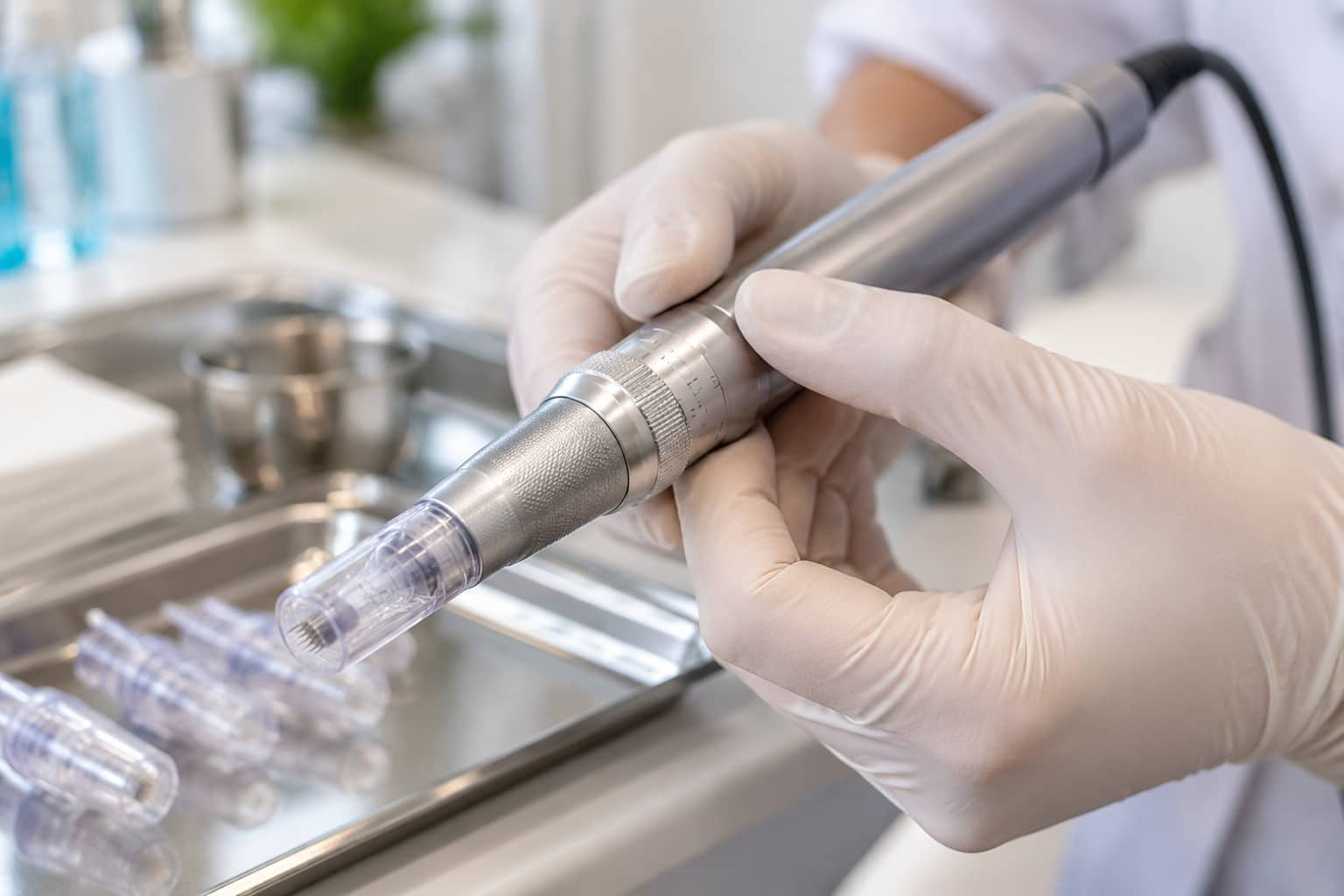
Depth is one of the biggest factors in how often you can safely treat.
| Needle depth | Typical use | Recommended interval |
|---|---|---|
| Under 0.5 mm | Glow, product absorption, very fine texture | Every 2 to 4 weeks in a professional setting |
| 0.5 mm to 1.0 mm | Fine lines, pores, mild texture | Every 4 weeks |
| 1.0 mm to 1.5 mm | Moderate texture, early scarring | Every 4 to 6 weeks |
| 1.5 mm to 2.5 mm | Acne scars, deeper scarring | Every 6 to 8 weeks |
Deeper treatments cause more controlled injury, so the skin needs longer to recover fully. Your practitioner may also vary depth across your face, using shallower settings on thin areas like the forehead and around the eyes.
Microneedling Frequency by Skin Concern
Different goals need different courses.
| Skin concern | Typical initial course | Interval | Maintenance |
|---|---|---|---|
| Dull skin and glow | 3 sessions | 4 weeks | Every 3 to 4 months |
| Enlarged pores | 3 to 4 sessions | 4 weeks | Every 3 to 4 months |
| Fine lines | 3 to 4 sessions | 4 to 6 weeks | Every 4 to 6 months |
| Uneven texture | 3 to 4 sessions | 4 to 6 weeks | Every 4 to 6 months |
| Mild acne scarring | 4 to 6 sessions | 4 to 6 weeks | Every 6 months |
| Moderate to deep acne scarring | 6 or more sessions | 6 to 8 weeks | Every 6 months, or as advised |
| Stretch marks | 4 to 6 sessions | 4 to 6 weeks | As advised |
These are typical ranges rather than fixed rules. Your practitioner will adjust based on how your skin responds after each session.
Microneedling Frequency for Acne Scars
Acne scars usually need the longest course, because scar tissue is dense and takes repeated stimulation to remodel. A course of four to six sessions is common, and deeper or more widespread scarring may need more.
Sessions are often spaced six weeks or more apart, especially at deeper settings. In practice, many patients notice the biggest visible improvement after the third or fourth session, once several rounds of collagen remodelling have built on each other. Taking photos in the same lighting before each session helps you see progress that’s hard to notice day to day.
Active acne needs to be under control before treatment, since microneedling over active breakouts can spread bacteria and worsen inflammation.
Microneedling Frequency for Fine Lines and Ageing Skin
For fine lines and early loss of firmness, three to four sessions spaced about four to six weeks apart is typical. Mature skin can heal a little more slowly, so some practitioners prefer slightly longer intervals for patients in their fifties and beyond.
Maintenance every four to six months helps keep collagen production active, since natural collagen continues to decline with age.
Frequency by Skin Type
Skin type also affects how often you should treat.
- Sensitive skin: Longer intervals and shallower depths, with careful monitoring of redness.
- Oily or acne-prone skin: Treatment only when breakouts are controlled, typically every 4 to 6 weeks.
- Dry skin: Standard intervals, with extra attention to hydration afterward.
- Darker skin tones: Often suitable, but conservative depths and longer gaps help reduce the risk of post-inflammatory pigmentation.
- Thin or mature skin: Slightly longer recovery between sessions may be recommended.
Frequency by Age
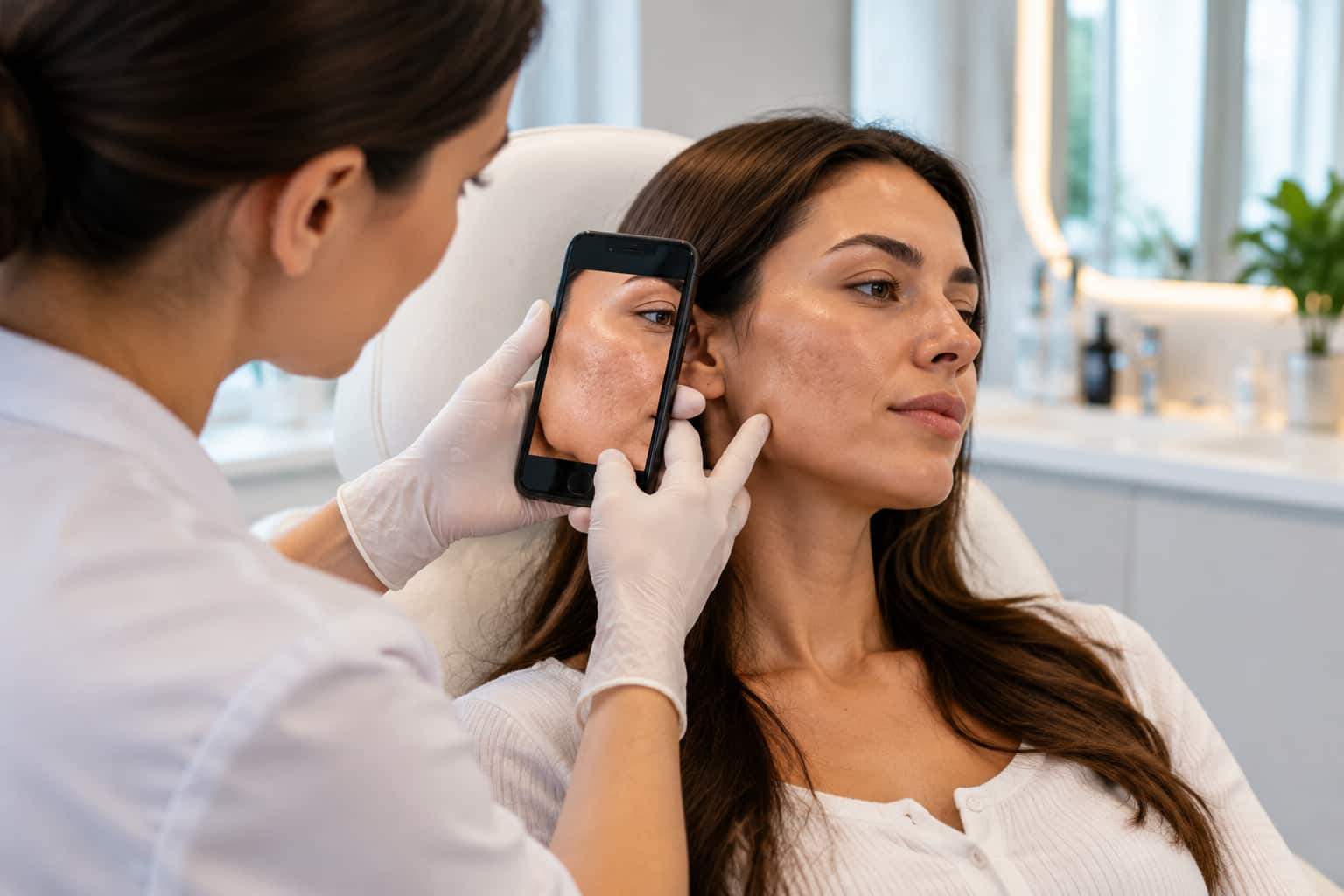
Age changes how quickly skin heals and how much maintenance it needs.
| Age range | Typical approach |
|---|---|
| 20s | Occasional treatment for glow, texture or scarring, maintenance every 4 to 6 months |
| 30s | Course for early fine lines or pores, maintenance every 4 to 6 months |
| 40s | Course of 3 to 4 sessions, maintenance every 3 to 6 months |
| 50s and beyond | Course with slightly longer gaps, regular maintenance to support collagen |
RF Microneedling Frequency
Radiofrequency microneedling combines needles with heat delivered into deeper layers of the skin. Because it creates more intense stimulation, sessions are usually spaced further apart, often four to six weeks or more, and courses may involve fewer sessions than standard microneedling. Recovery can also take slightly longer. Your practitioner will set intervals based on the device settings and your skin’s response.
What About At-Home Microneedling?
At-home dermarollers and pens use much shorter needles, mostly designed to improve skincare absorption rather than stimulate significant collagen. Even so, using them too often can irritate the skin, especially if combined with strong actives.
If you use a home device, follow the manufacturer’s guidance, use it sparingly, never share it, and clean it thoroughly every time. Avoid using home devices in the weeks around professional treatment unless your practitioner agrees, since this can overload the skin.
Signs You’re Microneedling Too Often
Treating too frequently can undo the benefits. Watch for these signs:
- Redness that lasts more than a few days
- Persistent dryness, flaking or tightness
- Increased sensitivity to products you normally tolerate
- New breakouts or small bumps
- Patches of darker pigmentation
- Results plateauing or skin looking worse
If you notice any of these, pause treatment and speak to your practitioner. Longer gaps or a lower depth may be needed.
What Happens If You Leave Too Long Between Sessions?
Leaving longer than planned between sessions isn’t harmful, but it can slow progress during an initial course. Collagen stimulation from earlier sessions continues for months, so missing a session by a few weeks usually just means results build more slowly.
For maintenance, gaps much longer than six months mean collagen levels gradually return to their natural rate of decline. A slightly longer course may then be needed to regain previous results.
Planning Microneedling Around Events
Because redness can last one to three days and results improve over weeks, timing matters.
- Book at least one to two weeks before an event for glow treatments
- Allow several weeks before major events if you’re having deeper treatment
- Avoid starting a new course right before holidays in strong sun
- Plan maintenance sessions so they don’t clash with important dates
Combining Microneedling with Other Treatments
When microneedling is part of a wider plan, other treatments affect scheduling.
- Chemical peels: Usually spaced a few weeks apart from microneedling to avoid over-exfoliating the skin.
- Skin boosters: Often alternated with microneedling sessions, since both improve skin quality. Our guide to what skin boosters are explains how they work.
- Dermal fillers: Avoid microneedling over recently filled areas for at least two weeks. Our dermal filler treatments in South Kensington are planned with spacing in mind.
- Anti-wrinkle injections: Usually spaced at least a week or two apart. Our anti-wrinkle treatment in South Kensington can be scheduled around your microneedling course.
How to Get the Most from Each Session
Good habits between sessions help each treatment work harder.
- Wear SPF daily, since healing skin is more sensitive to sun damage
- Pause retinol and acids for about five to seven days after each session
- Keep skin hydrated with gentle, fragrance-free products
- Avoid tanning before and during a course
- Don’t pick at flaking skin
- Keep to your scheduled appointments where possible
A Sample Microneedling Schedule
Here’s an example for someone treating mild acne scarring:
| Month | Treatment |
|---|---|
| Month 1 | Session 1 |
| Month 2 | Session 2 |
| Month 3 | Session 3 |
| Month 4 or 5 | Session 4 |
| Month 6 | Review progress, optional session 5 |
| Every 6 months after | Maintenance session |
A plan for glow or fine lines would usually be shorter, with three sessions and maintenance every three to six months.
How Lifestyle Affects Your Schedule
A few everyday factors can change how quickly skin recovers between sessions.
- Sun exposure: Tanned or sun-damaged skin heals more slowly and has a higher risk of pigmentation, so sessions may need to wait.
- Smoking: Reduces blood flow to the skin and can slow healing.
- Sleep and stress: Poor sleep and high stress may affect recovery.
- Travel: Long flights dry out the skin, so avoid booking treatment right before travel.
- Exercise: Intense workouts and heat should be avoided for 24 to 48 hours after each session.
Seasonal Timing for Microneedling
Many practitioners prefer starting a microneedling course in the cooler, darker months of autumn and winter. UV exposure is lower, which reduces the risk of pigmentation while the skin heals. Summer treatment is still possible with strict SPF use and sun avoidance, but holidays in strong sun should be planned around sessions rather than straight after them.
Questions to Ask About Your Treatment Plan
- How many sessions do you recommend for my concern?
- What depth will you use, and will it change between sessions?
- How long should I wait between treatments?
- When should I start maintenance?
- What signs mean I should pause treatment?
- How should I adjust my skincare between sessions?
A clear, personalised answer to each of these is a good sign that your schedule is based on your skin rather than a standard package.
Frequency for the Neck, Chest and Body
Areas beyond the face often follow different schedules.
- Neck: Thinner skin, so shallower depths and intervals of about four to six weeks are common.
- Décolletage: Similar to the neck, often treated in a course of three to four sessions.
- Hands: Thin skin with slower healing, usually spaced four to six weeks apart.
- Stretch marks on the body: Deeper settings and intervals of four to eight weeks, with courses of four to six sessions or more.
Treating several areas in one appointment is possible, but your practitioner may adjust depth and spacing for each.
Tracking Your Results Between Sessions
Because microneedling improves skin gradually, it’s easy to miss progress. Taking photos in the same lighting and position before each session helps you and your practitioner judge whether the schedule is working. If results plateau, your practitioner may adjust depth, intervals or add a complementary treatment rather than simply adding more sessions.
When to Pause Your Microneedling Schedule
Sometimes a planned session should be postponed. Delay treatment if you have an active breakout, cold sore, rash, sunburn or recent tan in the area, or if you’ve started a new medicine that affects healing. It’s also sensible to pause during pregnancy and breastfeeding. A short delay protects your skin and won’t undo progress from earlier sessions.
Common Myths About Microneedling Frequency
- “More sessions closer together means faster results.” Treating too often interrupts healing and can make skin worse.
- “One session is enough.” Most concerns need a course.
- “Once you finish a course, results last forever.” Maintenance helps keep collagen production active.
- “Home rollers can replace clinic sessions.” They work far more superficially.
Frequently Asked Questions
How often should you get microneedling? Most people benefit from sessions about four to six weeks apart during an initial course, then maintenance every three to six months.
Can you microneedle every two weeks? Only very shallow treatments may be done that often. Deeper treatments for scars or lines need four to eight weeks between sessions.
How many microneedling sessions do I need for acne scars? Usually four to six sessions or more, spaced around six weeks apart, depending on scar depth.
How often should I get microneedling for maintenance? Every three to six months, depending on your skin goals and how your skin responds.
What happens if I microneedle too often? Over-treatment can cause prolonged redness, irritation, breakouts or pigmentation and may slow results.
Is RF microneedling done more or less often? Usually less often, with sessions spaced four to six weeks or more because the treatment is more intense.
Can I use a home roller between clinic sessions? Only if your practitioner agrees. Using home devices too close to professional treatment can irritate the skin.